



Armadillo skull
Armadillo is a mammal of the family Armadillidae in the order Heterodontoides. The bone armor covers the head, body, tail, and outer legs. The bone armor in the head, front half, and back half is separated, and the bone armor in the body forms a band shape, allowing for flexible movement; Having sparse hair in areas of the body without bone armor; There are strong claws on the front foot. The armadillo is named after the nine layered ribbon on its body. Distributed in the southern tip of South America, the Caribbean coast, and the Central American continent, it often inhabits dense shrubs, grasslands, wilderness, and has strong adaptability. It is a burrowing animal that lives underground, crouching during the day and emerging at night. Its vision is poor, but its sense of smell is excellent.

Turtle skull
Pelodiscusssine is a reptile belonging to the family Turtles in the order Turtles, commonly known as turtle, grouper, water fish, turtle, and foot fish. It has an elliptical shape and is flatter than a turtle. They live in rivers, lakes, ponds, reservoirs and mountain streams, and hibernate at the bottom of the pool in winter. Xiyang is afraid of wind, Xijing is afraid of shock, Xijie is afraid of dirt, and Xidong and climbing are preferred. They move more frequently along the quiet, clean, and sunny waterfront. Soft shelled turtles have a wide and diverse diet, mainly consisting of animal based foods, as well as decaying plants and tender aquatic plants. They have strong hunger tolerance and are classified as ectothermic animals. Their feeding and growth vary with changes in water temperature.

Giant Salamander Skull
The giant salamander (Andrias davidianus), also known as the fire lizard, has a total length of 12-15 centimeters, obvious grooves between its ribs, no lung structure, and relies entirely on its skin for gas exchange. It inhabits karst geological caves and lives in water, with high requirements for water quality. Feed on benthic cephalopods, annelids, and aquatic invertebrates. There are about 400 species of the largest amphibians in the world. They mostly inhabit freshwater and swamp areas, mainly in temperate regions of the Northern Hemisphere. It is a first-class protected animal in China. Salamanders mainly feed on insects, worms, snails, and some small animals.
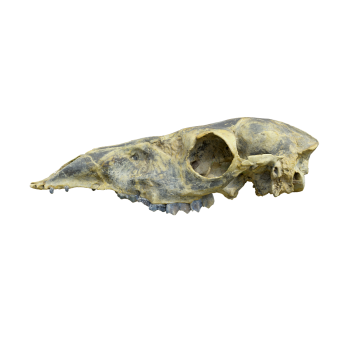
Upper skull of camel
Camel genus, belonging to the family Camelidae in the order Artiodactyla, is divided into two types based on morphology: Bactrian camels and Bactrian camels. Also known as "Tuotuo". Its head is small, the neck is thick and long, curved like a goose's neck, with double eyelids and thick long eyelashes, and the nose can be freely closed. It can reproduce and thrive on barren desert grasslands, and can still work without drinking water or eating forage for 5-7 days. Camels enjoy eating hard branches, tall shrubs, foul smelling grasses, and thorny plants. Has high economic value. Camel milk can be processed into dairy products such as yogurt, butter, white oil, cheese, dairy beverages, etc; Camel manure is one of the fuels used by herdsmen for heating. It is known as the 'ship of the desert'.

Snapper skull
The Sparidae family refers to the phylum Chordata, suborder Vertebrates, order Perciformes, suborder Percoidei, and order Perciformes. The appearance of undergraduate fish is similar to that of the family Cichlidae or the family Percoidei, but the body size of the snapper is higher and more flattened; The incisors, canine teeth, and molars on both sides of the upper and lower jaws are relatively developed. The body is elliptical or oval in shape, with a large head and a higher front half. The back edge is curved, and the abdominal edge is relatively flat. As an important economic fish species along the coast of our country, it belongs to advanced edible fish. Likes to forage in small groups. Omnivorous, mainly feeding on benthic crustaceans, mollusks, echinoderms, or seaweed, occasionally preying on small fish. Androgynous and capable of sexual transformation.

African Warthog Skull
African wart pig (Phacochoerus africanus): also known as a common wart pig, weighing between 50-75 kilograms, named after the warts under its eyes, which may help protect its eyes when digging for food. The head is relatively large, accounting for one-third of the body length. Having a mane on the back. Four fangs, long and sharp. Living alone or in groups, skilled at digging caves. They feed on green grass, moss, and tubers, and occasionally consume carrion. Enjoy mud baths. Has strong survival ability, is very adaptable to high temperatures and dry environments, and can go without drinking water for several months in a row. Be aggressive and have a developed sense of smell.

Camel skull
Camel deer is a mammal of the camel genus in the family Camelidae of the order Artiodactyla. Camel deer have a larger body size, generally ranging from 2-2.6 meters in length. The body resembles a camel, with four long legs similar to a camel. The shoulders are high, the head is large, the eyes are small, the face is long, the neck is short, the nose is enlarged and slightly drooping, and the upper lip is 5-6 centimeters longer than the lower lip. The hair color of the whole body is brown, the nose is thickened, and there is a chin pouch under the throat. Named after the hump shaped back hump and the horn shaped lower jaw. Typical subarctic coniferous forest animals, wandering in groups in the forest clearing, like to eat tender branches of plants, move quickly and agilely, and can run quickly. Long legs, able to walk freely even in thick snow

Beaver skull
The beaver (scientific name: Castorfiber) is an animal of the beaver family and genus. The body of a beaver is enlarged, with no significant difference between males and females. The head is short and dull, the eyes are small, the neck is short, the limbs are short and wide, the forelimbs are short, the feet are small and have strong claws, the hind limbs are thick and strong, and the tail is large and flat. Nighttime activity, rarely going out of caves during the day, good at swimming and diving, not hibernating, weak self-defense ability, timid, fond of eating tender branches, bark, and roots of various plants. The skull is related to biting trees, exceptionally solid, with well-developed bone ridges and prominent sagittal and herringbone ridges. The nasal bone is wide in front and narrow in the back. The cheekbones are particularly thick. The incisors are chiseled in shape and suitable for biting through branches and trunks.

High crowned chameleon skull
Chamaeleocalyptoratus is a type of chameleon named after the towering flesh crown on its head. It is one of the few species found in Asia, while the rest are mostly found in Africa, especially on the island of Madagascar. The high crowned chameleon is named after the towering, hat like crown composed of bone plates on their heads, and is a arboreal diurnal chameleon. The high crown chameleon adapts to a wide temperature range, making them the easiest chameleon species to breed. The main food of omnivorous species is insects, and most chameleons will develop anorexia towards a single food, sometimes refusing to eat until death.

North American opossum skull
Didelphis virginiana, a North American opossum, is a mammal belonging to the suborder Theropoda, order Notothenioidei, family Notothenioidei, and genus Notothenioidei. The only marsupial that inhabits north of the Rio Grande in North America. It is a solitary and nocturnal animal, about the size of a domestic cat. Their ancestors began to evolve in South America and entered North America 3 million years ago through the Great Migration of North and South American organisms. They usually appear in nearby cities. It is the largest member of the opossum genus and the largest member of the opossum order. They are generally 38-51 centimeters long and weigh 4-6 kilograms. Omnivorous, eating different types of plants and animals.

Mane lion lizard skull
Pogonavitticeps is a reptile of the genus Pogonavitticeps in the order Scorpaeniformes. The body of the maned lion lizard is thick and flat, covered with spiny scales on its back and neck, and the spines on its sides are arranged in a regular pattern in front of its forelimbs. When threatened, they will show off by opening their mouth and inflating their prickly throat to appear stronger and scare their opponents, hence the name. It is a semi terrestrial species that can move on flat ground or stay on rocks or tree branches. I have a preference for meat and occasionally consume plant flowers and leaves. Living in a high-temperature and dry environment. Mane lion lizards have a strong sense of class.
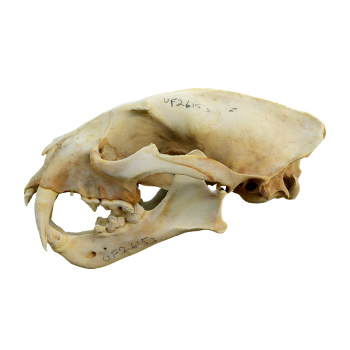
Cloud leopard skull
Neofelisnebu is a carnivorous mammal belonging to the feline family Neofelisnebu. There are unique cloud like flower spots on the back and sides of the body; The primary color of the fur is uniform light blue to gray, with large cloud like patches on the sides of the body; Two intermittent black stripes extend from the spine to the base of the tail; There are 6 longitudinal lines on the neck, starting behind the ears; There are large black oval plaques on the limbs and ventral side; There are plaques on the crown of the head, white on the nose and snout, and dark stripes extending from the eyes and corners of the mouth to the side of the head. It inhabits primitive evergreen tropical rainforests, but is also found in secondary forests and logging forests. Prey small mammals and birds, and attack chicken coops. Night walking, living alone.

Double crowned Cormorant Skull
The double crowned cormorant (Phalaclocoraxauritus) is a bird species in the family Scomorantidae of the order Characiformes. Its beak is strong and long, with grooves on both sides of the upper beak and a hook at the tip, making it suitable for pecking at fish; There is a laryngeal sac at the base of the lower mouth; Small nostrils, completely concealed in adult birds; Expose your eyes first; Slender neck; Two wings of moderate length, lacking a fifth secondary feather; The tail is round and hard straight, with 12-14 tail feathers; The feet are located at the back of the body; Short tarsus without feathers; Flat toes, long hind toes, connected by webbing. After diving, the feathers are soaked and need to spread their wings to dry in the sun before they can fly. Residing on islands, coastlines, and swampy areas. They mainly eat fish and crustaceans.

Chameleon skull
Chameleon is a general term for reptiles in the order Lizards, family Auchenipteridae, with the scientific name Auchenipteridae. The skin is covered with granular scales, and there are various pigment cells in the dermis that can stretch and change body color at any time; There are blunt triangular protrusions on the head; Both eyes are independent and can freely turn to different perspectives; There are ridges on the back; The limbs are relatively long, with 5 fingers and toes on both the front and back limbs, divided into 2 groups. The inner 3 fingers of the front limb are healed, and the outer 2 fingers are healed together and can be held together; The hind limbs are opposite, with the inner 2 toes and outer 3 toes healed and held relative to each other. Mainly distributed on the African continent and Madagascar Island, inhabiting trees, with a few species inhabiting the ground. Mainly feeding on insects.

Barracuda skull
The barracuda is a fish species belonging to the family Scorpaenidae in the order Perciformes, suborder Scombroidei. Also known as Barracuda or Sparrow Brocade, it is a species of ray finned fish in the family of Barracuda, belonging to the genus Gobiidae. The body is elongated, with a pointed front end and a slightly flattened rear end. Belonging to a global fish species, it is distributed in various sea areas around the world. So far, 20 species of barracuda have been discovered, and barracuda in different seas have completely different behavior patterns. However, their "solitary" behavior is a common feature, and adult barracuda have almost no natural enemies. Juvenile fish feed on planktonic animals, while adult fish feed on diatoms and small organisms. Usually inhabits the sea
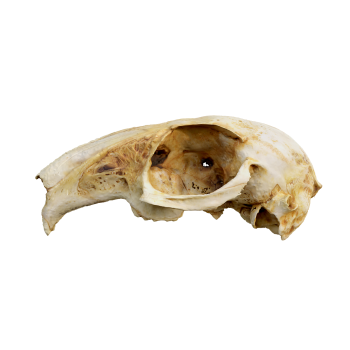
Upper skull of desert cotton tailed rabbit
Sylvilagusauduboni: a mammal belonging to the genus Sylvilagusauduboni in the family Actinidae. Body length 30-38 centimeters, ear length 7 centimeters, weight 0.85-1 kilograms. Females are slightly larger than males. The fur is generally light brown, brown or gray; The lower abdomen of the body turns white; The throat often has an orange brown stripe; The tail wraps around and looks like a cotton ball. The habitat is dry grasslands, shrubs, coastal areas, and juniper forests. Usually inactive at noon, foraging in the early morning and evening. It is a herbivore that feeds on various plants, including grass, shrubs, leaves, and cacti.

Black footed Albatross Skull
Phoebastrianigrills is a large seabird belonging to the family Albatrosidae in the order Siluriformes. It is a monotypic species with no subspecies differentiation. The body length is 79-83 centimeters. The mouth is black, the base of the mouth and the area under the eyes are gray white, and the rest of the body is black brown. Some individuals have white tail feathers and black feet, which can distinguish them from short tailed albatrosses. Breeding in groups, enjoying following boats to forage, often inhabiting the sea. Distributed in the North Pacific. China is commonly found in the Taiwan Strait, and in the South China Sea during spring and winter, with very few populations. Mainly foraging for marine invertebrates and fish such as cephalopods and mollusks.

Black Tree Lizard Skull
The Varanus beccarii, also known as the Black Pearl Lizard, is a medium-sized giant lizard. The body length is about 90-100 centimeters, and its characteristic color is completely black. The juvenile's chest is light green, and its tail is quite slender. The scales on the tail are arranged in a circular pattern. This species is a close relative of the emerald green giant lizard. A species that is completely arboreal, although its distribution area has little rainfall, the black tree monitor lizard needs to live in a high humidity environment, is timid and somewhat neurotic, and feeds on insects, reptiles, birds, and small mammals. Distributed in the Aru Islands west of Papua New Guinea. Residing in mangrove forests.

Mink skull
Neovisonvison is a mammalian species belonging to the genus Neovisonvison in the family Italidae, order Carnivora. The tail is less than half the length of the head, and the ears are short and round. The body is slender and the limbs are short. The head is narrow and elongated, with a sensitive sense of smell and hearing. Residing in areas near freshwater. The lifestyle is semi aquatic. Carnivorous, mainly feeding on rodents, bird eggs and chicks, fish, insects, and plant fruits. Distributed in the United States and Canada. Usually active at night, occasionally appearing during the day. He is a great swimmer who can dive to a depth of 5 to 6 meters and won't chase prey for long distances in open waters. Still a skilled tree climber.

Grey whale skull
The gray whale (scientific name: Eschrichtiusrobustus) belongs to the family of gray whales in the suborder of baleen whales of the order Artiodactyla. It has a larger body circumference than species in the family of baleen whales, but smaller than the humpback whale; Its adult length is 10 to 15 meters (female whales are slightly larger than male whales), and its maximum weight exceeds 35 tons. The body is spindle shaped, with a thick and chubby trunk, thickest near the fins, and gradually narrows towards the tail. Without dorsal fins, there are 8-15 low peaks along the posterior one-third of the spine, with the first peak being the largest and decreasing towards the tail. Mainly feeds on planktonic small crustaceans, herring eggs, and other group fish. But they do not feed during their southward migration.

White egret skull
Egret is a medium-sized wading bird belonging to the family Egret in the order Characiformes. There are 13 species of birds in the genus Egret, among which the Big, Medium, Small Egret, and Snow Egret are all white in body feathers, commonly known as Egrets, and have a medium body size. Distributed in the Yangtze River Basin and other areas of China, as well as in Africa, central and southern Europe, West Asia, Central Asia, East Asia, Southeast Asia, Oceania and other regions. They inhabit lakes, ponds, estuaries, and other water bodies in low altitude areas, often gathering in small groups and active in shallow waters or riverbanks. They often forage in the water during the day and fly back to the forest to rest at night. White egrets prey on small fish, shrimp, frogs, mollusks, insects, and also peck at small amounts of plant seeds.

Negative rat skull
Didelphinae is a general term for mammals in the family Didelphinae, belonging to the marsupial order, and is a small to medium-sized mammal. Due to the fact that female opossums can carry their young around and run around, they are named "opossums". Has the largest number of teeth among living land mammals. Nocturnal, gentle temperament, often goes out at night, preys on small invertebrates such as insects and snails, and also eats some plant-based food. When threatened or injured, opossums will roar (especially males), pretend to be dead, and mimic the appearance and scent of sick or dead animals. He is known as the "brake man" because he suddenly stands still while running, confusing predators, and then suddenly jumps up to escape

Galapagos land iguana skull
The Galapagos land iguana (scientific name: Conolophussubicritatus) weighs up to 13 kilograms and measures 1 meter in length. The lower half is orange yellow, and the upper half is reddish brown. Due to the low corners, their appearance looks particularly foolish. The land iguana is distributed on six islands in the Galapagos Islands and is a unique species that evolved on the islands. The earthy yellow skin is designed to adapt to the color of sand and rocks. They mainly feed on cacti, which is related to the relatively dry climate of the Galapagos Islands. They choose to eat cacti because they can obtain the water their bodies need.

Macaque skull
Macaca (scientific name: Macaca) is a mammal belonging to the genus Macaca in the primate family. The body is thick and robust, with a smaller body size compared to other members of the same genus; Both hands and feet have 5 fingers and toes, with flat nails; The limbs are basically of equal length, and the thumb can be relative to the other four fingers; The distance between the eyes is narrow, and stereoscopic vision is developed, which can distinguish colors. It inhabits broad-leaved forests in tropical, subtropical, and warm temperate regions, living in clusters of 30-50 individuals. Omnivorous, feeding on wild fruits, leaves, insects, and also stealing crops such as corn and sugarcane. It is a relatively ancient primate and a rare animal in the Mulao ethnic region.

Popular Models
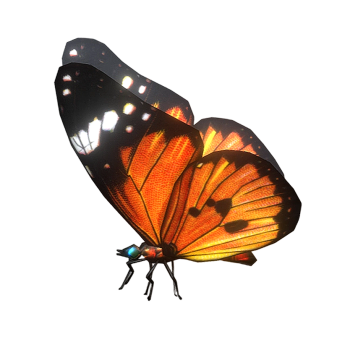
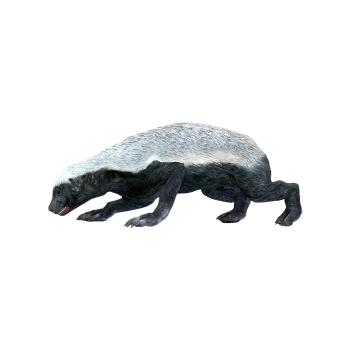
Honey Badger (3D animated model)
192 View
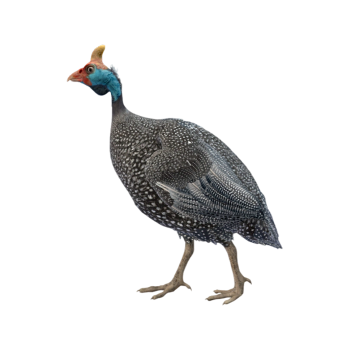
Guinea fowl (3D animated model)
163 View
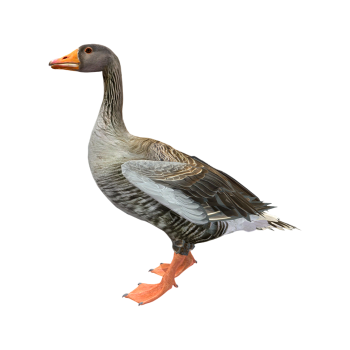
Wild Goose (3D animated model)
185 View
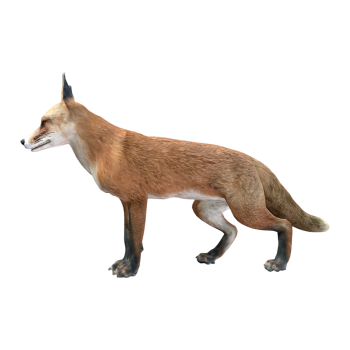
Red Fox (3D animated model)
153 View
Random Model


VintageSteamer luggage
968 View
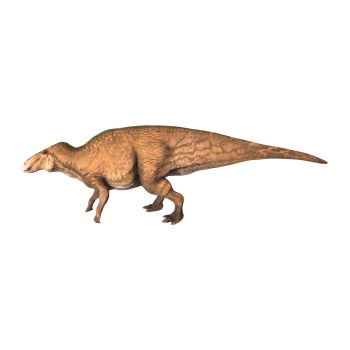
Edmonton Dragon (3D animated model)
199 View

Dyer Abbey
451 View

Red bicycle pedals
883 View

Panasonic VHS-C home camera
729 View
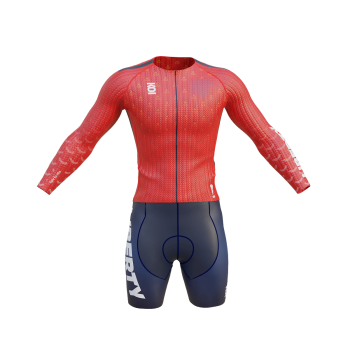
LUCyclingClub sports jacket
666 View


Denim Jacket
610 View
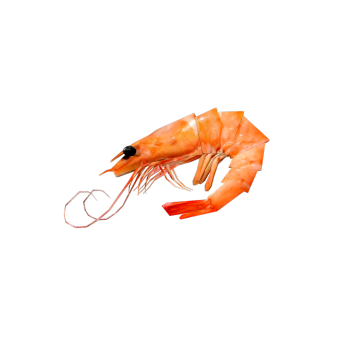
Shrimp
698 View